The 7-Second Bladder Strengthening Trick: A Game-Changer for Women Struggling with Pee Leaks?
Tired of leaking when you laugh, cough, or exercise? Groundbreaking research shows the true culprit is not weak muscles, but a microscopic shift in your bladder's ecosystem. Here is how the 7-Second Harvard-Backed “Bladder Restoration” Trick and the daily 7-Second Bladder Reset ritual actually work.

For years, women experiencing bladder leaks have been told the same old stories: "It's just a normal part of getting older," or "You just need to do more Kegels."
Many have spent months diligently squeezing their pelvic floor muscles, cutting back on water, and planning routes around public restrooms. Yet, the leaks persist when laughing, coughing, or simply walking too fast. If this sounds familiar, it is because traditional medical advice has missed the root cause entirely.
According to recent clinical studies, the real problem is not a simple weakness in your pelvic muscles. Rather, it is a microscopic imbalance in your urinary microbiome—the protective community of bacteria that coats your bladder lining. When this delicate ecosystem is disrupted, your bladder walls become inflamed and irritated, causing sudden, uncontrollable muscle spasms.
The Harvard-Backed Discovery: The Urinary Microbiome
This scientific discovery is the clinical basis of the 7-Second Harvard-Backed “Bladder Restoration” Trick. A team of researchers from Harvard University and the Broad Institute discovered that a healthy bladder lining is coated in a thick, protective biofilm made up of beneficial bacteria—predominantly Lactobacillus crispatus. This strain maintains an acidic environment that shields the bladder wall from toxins and pathobionts.
As women age, experience menopause, or take courses of antibiotics, these beneficial Lactobacillus populations decline. Without their protection, harmful bacteria adhere to the bladder tissue, triggering localized inflammation. This chemical irritation sends false "fullness" distress signals to the brain, resulting in bladder hyper-sensitivity and leakage.
Biofilm Protection vs. Dysbiosis Spasms
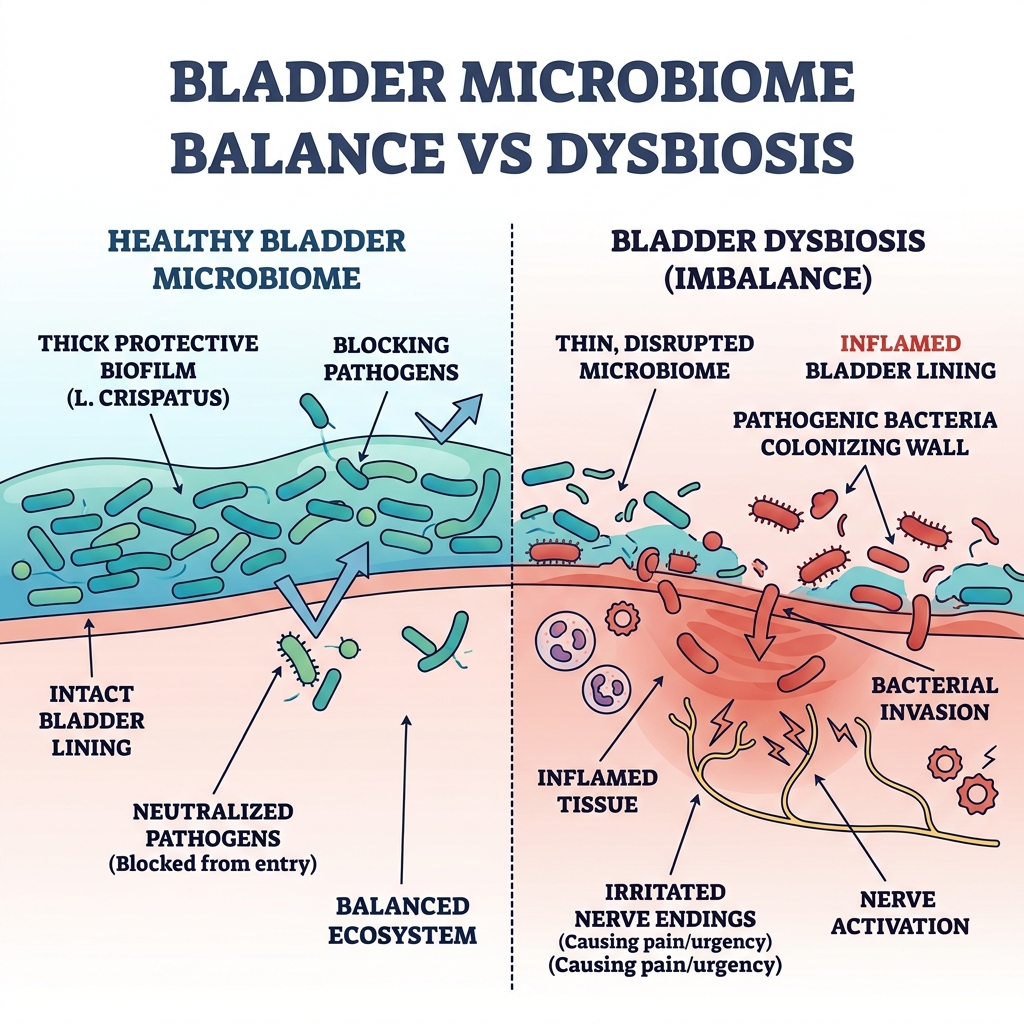 Citing Research: Lactobacillus crispatus biofilms prevent pathobiont colonization and mucosal spasms.
This is why pelvic muscle exercises alone fail. You cannot solve a bacterial, mucosal inflammation problem simply by squeezing your muscles. To stop the leaks, you must reset the bladder's microbiome.
What Is the 7-Second Bladder Reset Routine?
The 7-Second Bladder Reset trick (also commonly referred to as the daily 7-Second Bladder Reset ritual) is a daily urogenital routine created by leading gynecologists to address both the physical alignment of the pelvic organs and the microbial health of the bladder. Unlike tedious muscle programs, it is completed in three simple steps:
The 3 Steps of the 7-Second Bladder Reset
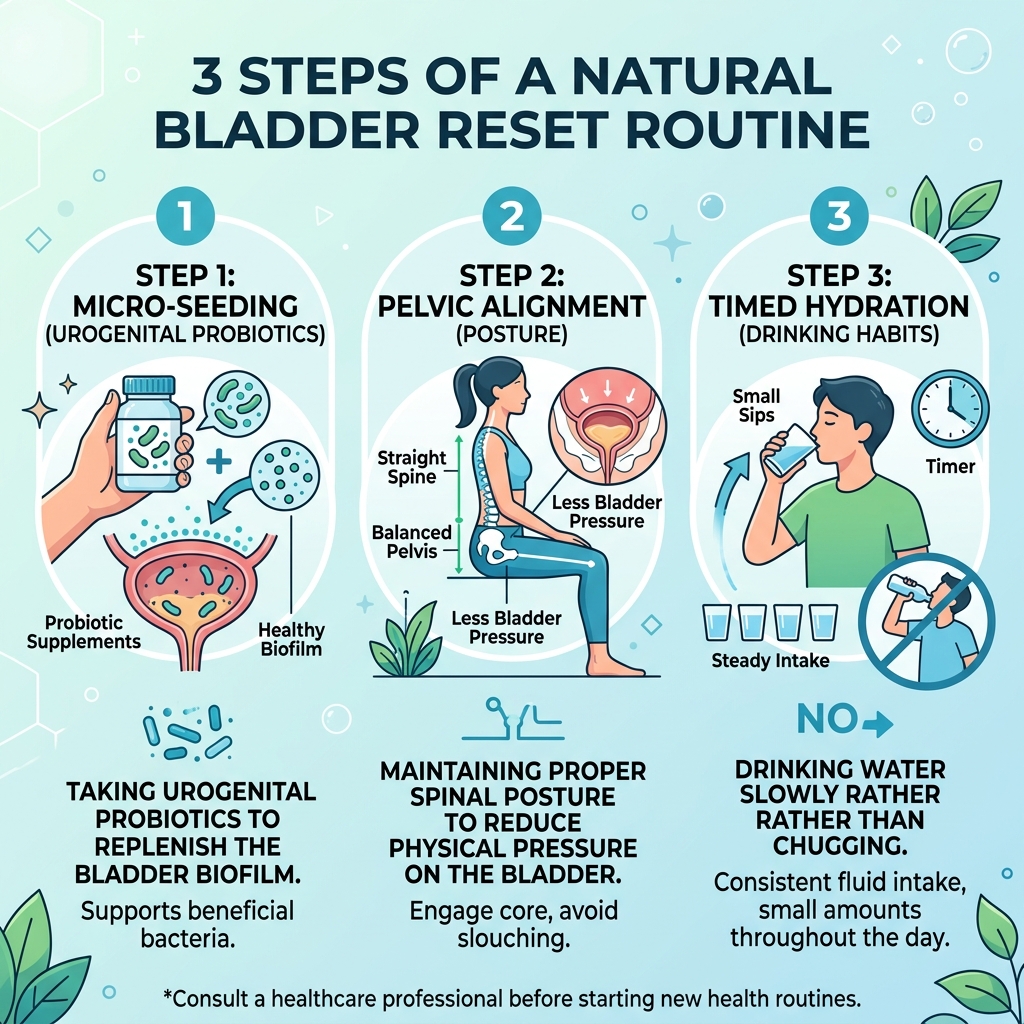 Step 1: Micro-seeding probiotics | Step 2: Posture alignment | Step 3: Timed hydration.
Step 1: Micro-Seeding (Microbiome Reseeding)
The most critical step. Every morning, you introduce billions of live, urogenital-targeted Lactobacillus strains—specifically L. crispatus—directly into your system. This is done in seconds by taking a clinically dosed urogenital probiotic capsule like FemiCore. This re-establishes the protective biofilm and neutralizes pathobionts.
Step 2: Pelvic Alignment Adjustment (7 Seconds)
Every time you stand or sit after long intervals, take 7 seconds to align your spine. Stand flat on both feet, tuck your tailbone slightly, and pull your navel gently toward your spine. This postural correction immediately relieves downward pressure on the bladder sphincter, preventing physical stress leaks.
Step 3: Timed Hydration Habit
Instead of drinking large glasses of water all at once—which suddenly stretches and irritates the bladder walls—sip water slowly at structured intervals. This keeps the bladder volume stable and prevents sudden contractions.
Bladder Control Problems in the United States
If you are dealing with frequent leaks or midnight bathroom trips, you are far from alone. Statistics compiled by the National Health and Nutrition Examination Survey (NHANES) and the American Urological Association (AUA) reveal the massive scale of this health concern in the US:
Data verified by: The CDC's NHANES Database (NHANES Incontinence Study), the Urology Care Foundation (AUA Urology Guidelines), and clinical urogenital research published by the Mayo Clinic (Mayo Clinic Bladder Health Guide).
Why FemiCore is Key to the 7-Second Reset
To successfully execute Step 1 of the reset, you need a clinical urogenital formula that can actually survive stomach acid and colonize the bladder tract.
FemiCore is specifically formulated for this task. It delivers 5 billion active CFUs of targeted urogenital probiotics—including the crucial Lactobacillus crispatus strain—alongside active botanicals (Mimosa Pudica, Cranberry PACs, Bearberry, and Berberine HCl) that flush pathobionts out of the urinary tract.
By taking FemiCore daily, you provide the essential biological tools your bladder needs to rebuild its protective mucosal barrier, soothe hyper-sensitive pelvic nerves, and stop leaks from the inside out.
Frequently Asked Questions
The 7-Second Bladder Reset ritual is a daily urogenital routine that combines a quick pelvic-posture alignment habit with daily microbiome re-seeding (taking probiotics like Lactobacillus crispatus found in FemiCore) to strengthen and soothe the bladder lining.
While traditional Kegels focus on repetitive squeezing of the pelvic floor muscles, the 7-second reset focuses on the root cause of overactive spasms: an inflamed urinary microbiome biofilm. Rebalancing urogenital flora stops the chemical irritation that causes sudden spasms, meaning you do not have to do tedious muscle workouts all day.
Yes. Recent research from Harvard University and the National Institutes of Health (NIH) indicates that a healthy bladder is populated by beneficial Lactobacillus crispatus bacteria. A decline in these protective strains allows pathobionts to irritate the bladder mucosa, causing contractions and leaks.
Many women notice a reduction in urgency and occasional leaks within 14 to 30 days of daily microbiome re-seeding. For complete urogenital colonization, urologists suggest completing a 90 to 180-day cycle.